How Architects Are Using AI in Architecture and Construction in Pakistan
Artificial intelligence is changing architecture. Learn how architects use AI tools for design, visualization, and planning, and how AI may shape the future of architecture.
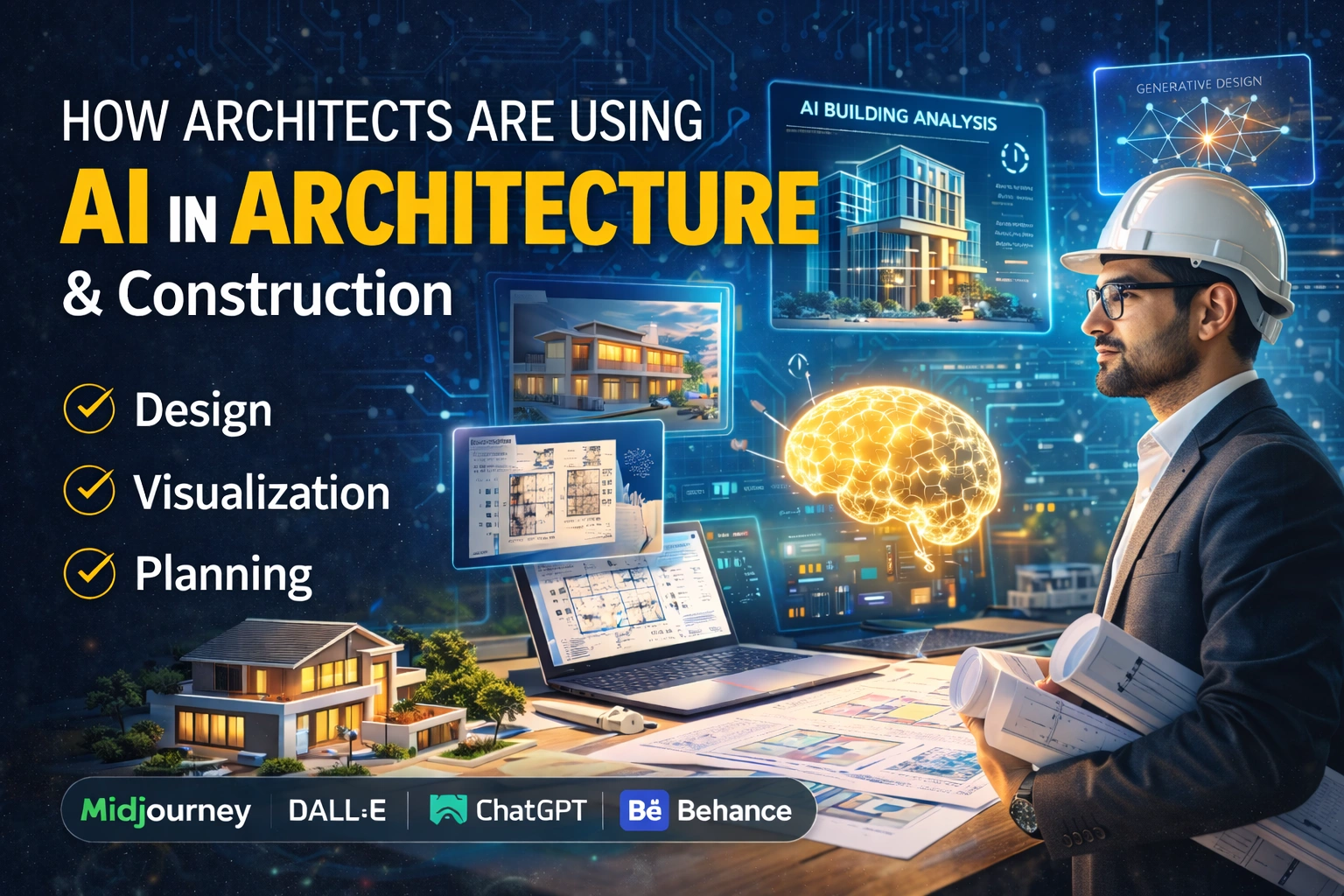
How Are Architects Using AI in Architecture Today? Artificial Intelligence is rapidly transforming many industries, and architecture is no exception. In recent years, architects and designers have started experimenting with AI tools to improve design efficiency, visualization, and project planning. Many professionals now ask an important question: Can AI actually help architects in their design process? While AI cannot replace architects, it can assist in several stages of architectural design and construction. In developing cities like Lahore, Islamabad, and Gujranwala, architects are slowly beginning to explore AI tools to improve workflow and productivity. Why AI Is Becoming Important in Architecture Architecture involves many complex processes such as concept development, technical drawings, visualization, and project coordination. AI tools can help automate repetitive tasks and allow architects to focus more on creativity and design thinking. Artificial intelligence can assist with: design inspiration image generation building analysis data processing visualization Instead of replacing architects, AI works as a support tool that speeds up certain tasks. Common Ways Architects Are Using AI 1. Concept Design and Idea Generation Many architects use AI tools to generate early design concepts or inspiration for projects. AI can quickly produce visual ideas based on prompts, which architects can refine into real designs. These tools help designers explore different architectural styles and forms before finalizing a concept. 2. Architectural Visualization AI image generators can create realistic architectural visuals from text descriptions or sketches. Architects can use these tools to quickly produce: concept renders mood boards architectural illustrations These visuals help communicate ideas to clients more effectively during the early design stage. 3. Space Planning Assistance AI tools can also assist in exploring layout options for residential and commercial spaces. By analyzing spatial relationships, AI can suggest potential floor plan arrangements. Architects can then refine these layouts according to building regulations and client requirements. 4. Construction Data Analysis In large projects, AI can analyze large amounts of construction data to identify patterns and improve project management. This can help architects and engineers make better decisions regarding: building materials structural performance project timelines Popular AI Tools Used by Architects Some AI tools are becoming popular among architects and designers. Midjourney Used for generating architectural concept images and design inspiration. DALL·E Creates architectural visuals based on text prompts. ChatGPT Helps architects with research, documentation, writing, and brainstorming design ideas. TestFit Helps architects and developers quickly test building layouts and development feasibility. What AI Still Cannot Replace Despite its advantages, AI still cannot replace the core role of architects. Architecture requires: understanding of human behavior cultural context construction knowledge site-specific decision making AI tools cannot fully replicate the creative and analytical thinking that architects bring to the design process. The Future of AI in Architecture In the future, AI will likely become a powerful assistant for architects rather than a replacement. It may help automate tasks such as: building analysis code compliance checking environmental simulations generative design exploration As technology evolves, architects who understand and adapt to AI tools may gain a competitive advantage in the profession. Final Thoughts Artificial intelligence is gradually becoming a useful tool in the architecture industry. While it cannot replace the creativity and expertise of architects, it can significantly improve efficiency in certain aspects of design and project development. For architects working in growing regions like Pakistan, learning how to integrate AI tools into their workflow may become an important skill in the future. By combining human creativity with technological innovation, architects can design smarter and more efficient buildings.
Want to work with us?
Contact our team in Gujranwala for architecture and design consultations.
Get in Touch