Why Houses in Pakistan Become Extremely Hot in Summer
Struggling with extreme indoor heat? Discover why houses in Pakistan get so hot in summer and learn architectural design solutions to keep homes naturally cooler.
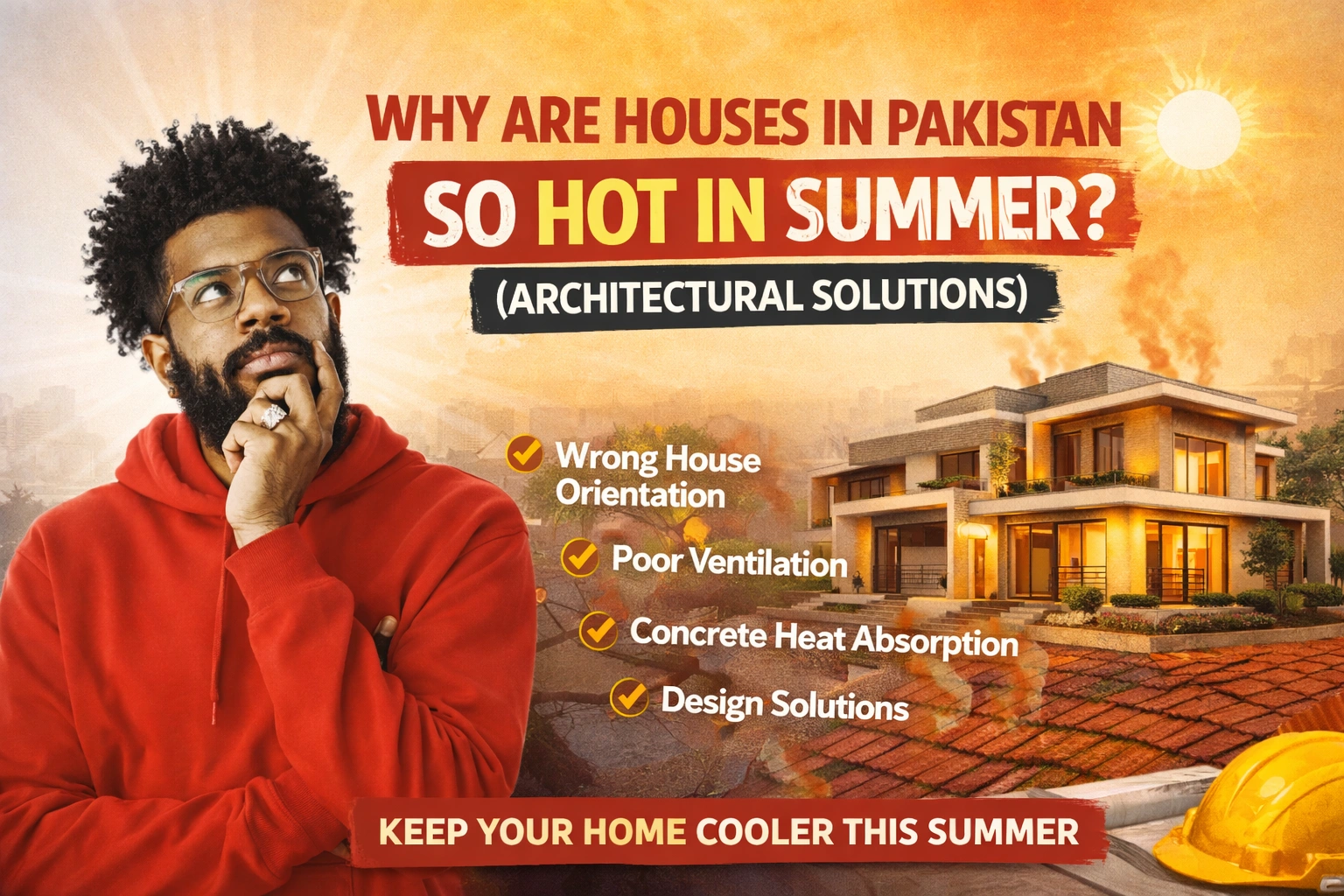
Why Are Houses in Pakistan So Hot in Summer? (Architectural Solutions) Many homeowners in Pakistan experience extremely hot indoor temperatures during summer. Even with fans running continuously, the interior of the house can feel uncomfortable, forcing people to rely heavily on air conditioning. Cities such as Lahore, Islamabad, and Gujranwala experience very high summer temperatures, often exceeding 40°C. However, the main reason houses become excessively hot is not just the weather—it is often poor architectural planning and design. Understanding these issues can help homeowners design houses that remain cooler and more comfortable even in extreme heat. Common Reasons Houses Become Hot 1. Wrong House Orientation House orientation plays a major role in controlling indoor temperature. When buildings face the wrong direction, they receive excessive direct sunlight during the hottest hours of the day. For example: west-facing walls receive intense afternoon sunlight large windows facing the sun increase heat gain poorly shaded facades trap heat inside the building Without proper orientation planning, houses absorb a large amount of solar heat throughout the day. 2. Poor Ventilation Another major reason houses become hot is poor ventilation. Many houses are built without considering airflow inside the building. Common ventilation problems include: small or poorly positioned windows blocked airflow between rooms lack of cross ventilation closed interior layouts When air cannot circulate properly, heat becomes trapped inside the house. 3. Concrete Heat Absorption Concrete and brick structures absorb heat during the day and slowly release it during the night. In cities with extremely hot climates, concrete roofs and walls store a large amount of heat energy. This causes indoor temperatures to remain high even after sunset. Flat concrete roofs, which are very common in Pakistani houses, often become major heat sources. Architectural Solutions to Keep Houses Cool Professional architectural design can significantly reduce indoor heat and improve comfort. Proper Building Orientation Architects carefully position buildings to reduce direct sun exposure. For example: minimizing west-facing openings designing shaded facades using balconies or projections for shading These strategies help reduce solar heat entering the house. Cross Ventilation Design Cross ventilation allows fresh air to move naturally through the house. Architects achieve this by: placing windows on opposite walls designing open circulation spaces allowing airflow between rooms Natural ventilation can significantly reduce indoor heat. Roof Insulation Roof insulation is one of the most effective ways to reduce heat inside houses. Common insulation solutions include: insulation layers above roof slabs reflective roof coatings double roof systems These techniques prevent heat from entering the building. Shaded Outdoor Spaces Architectural elements like: balconies verandas pergolas shaded terraces can block direct sunlight and protect the building from overheating. These elements also improve outdoor comfort during summer. Why Architectural Planning Matters Many houses become extremely hot simply because design decisions were made without professional architectural guidance. Architects consider several environmental factors during the design stage, including: sun direction wind movement shading strategies material performance By understanding the local climate, architects can design homes that remain naturally cooler and require less energy for cooling. Final Thoughts Extreme indoor heat is a common problem in many houses across Pakistan, especially in rapidly developing urban areas. However, most of these issues can be prevented through proper architectural design and climate-responsive planning. With the right design strategies—such as correct orientation, improved ventilation, and effective insulation—homes can remain significantly cooler even during the hottest summer months. Thoughtful architectural planning not only improves comfort but also reduces electricity consumption and long-term cooling costs.
Want to work with us?
Contact our team in Gujranwala for architecture and design consultations.
Get in Touch